Is Counting Cards Legal in Blackjack?
Counting cards in blackjack is a strategy used by players to gain an advantage over the casino by keeping track of the high and low cards that have been dealt. The legality of counting cards is a topic that often comes up in discussions about blackjack, and it’s essential to understand the nuances of this practice within different jurisdictions.
The Basics of Card Counting
Card counting is a technique that involves assigning a point value to each card dealt and keeping a running tally. Typically, high cards (10, Jack, Queen, King, Ace) are assigned a negative value, while low cards (2 through 6) are assigned a positive value. Cards 7 through 9 are usually considered neutral. By maintaining a running count, a player can estimate the proportion of high cards remaining in the deck, which can influence their betting and playing decisions.
Legal Aspects of Card Counting
- In the United States:
- Federal Law: There is no federal law in the United States that prohibits card counting. It is not considered illegal as long as no external devices or collusion are involved. Card counting is a mental skill, and players are legally allowed to use their brains to improve their chances of winning.
- State Law: Similar to federal law, most states do not have specific laws against card counting. However, casinos are private establishments and have the right to refuse service to anyone. If a player is caught counting cards, they may be asked to leave, banned from the casino, or placed on a watch list shared among other casinos.
- International Perspective:
- Europe: In many European countries, card counting is also not illegal. However, casinos in places like the United Kingdom and other parts of Europe can and do exercise their right to refuse service to suspected card counters.
- Asia: Casinos in Macau and other Asian gambling hubs may take stricter measures against card counters, ranging from asking them to leave to banning them from the premises.
Casino Countermeasures
Casinos employ various methods to counteract card counting. These include:
- Shuffling: Frequent shuffling of cards to disrupt the count.
- Automatic Shufflers: Machines that continuously shuffle the cards, making it difficult to maintain an accurate count.
- Table Limits: Adjusting the minimum and maximum bets to mitigate the impact of card counting.
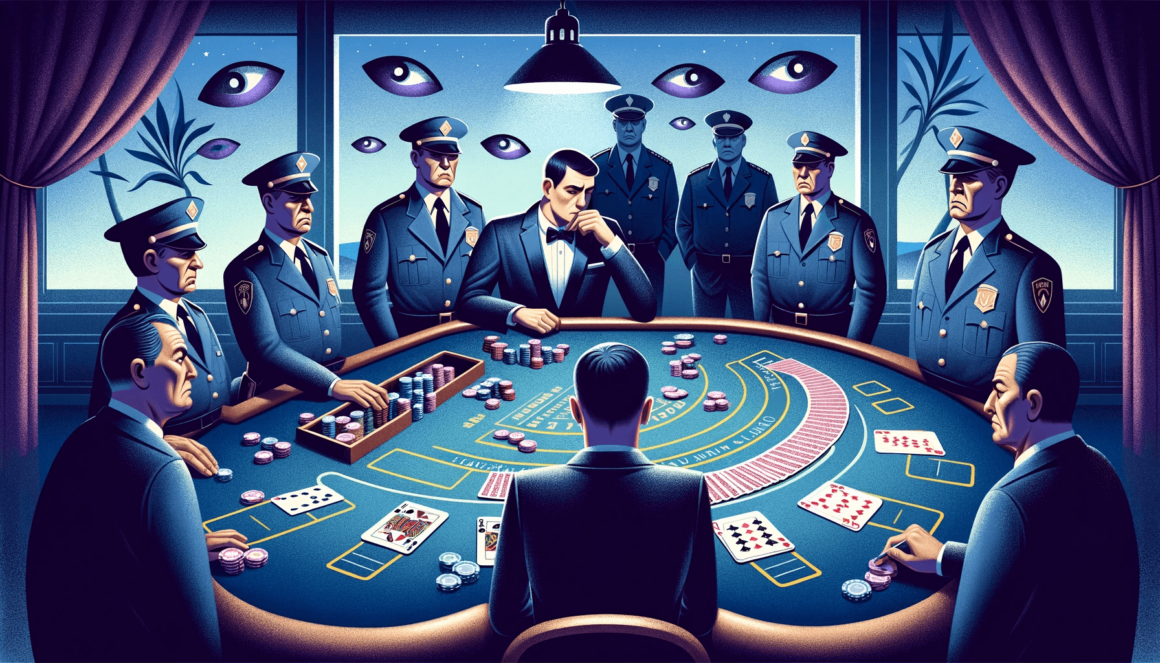
- Surveillance: Using cameras and floor staff to monitor players for signs of card counting.
Ethical Considerations
While card counting is not illegal, it raises ethical questions. Casinos argue that it undermines the integrity of the game and their business model. On the other hand, players who count cards view it as a legitimate strategy to level the playing field against the house’s inherent advantage.
Card counting in blackjack is a legal strategy in most jurisdictions, including the United States and many parts of Europe. However, it is frowned upon by casinos, which reserve the right to take action against players who employ this technique. As a result, while players can legally count cards, they must be prepared for potential consequences, such as being asked to leave or being banned from casinos.
Understanding the legal and ethical landscape of card counting can help players make informed decisions about using this strategy and navigating the world of blackjack.
